

Why Do Olive Tree Leaves Turn Yellow?


Your olive trees may be trying to tell you something about their health. If one week your olive trees appear healthy and established, then the next, the leaves begin fading into pale greens and yellows, you may be tempted to panic and suddenly start wondering if the tree is dying. But just remember:
If you’ve noticed olive trees turning yellow, you’re not alone.
Yellowing leaves are one of the most common concerns homeowners have with olive trees. And because olive trees are often planted as long-term landscape features, seeing the change can feel alarming—especially after investing time, money, and care into your yard.
However, in many cases, yellow leaves are less about failure and more about stress. Your olive tree is trying to tell you something.
Understanding the cause is the first step toward restoring the beauty and structure that made you plant your olive trees in the first place.
Olive Tree Leaves Turning Yellow from Over-watering
One of the most common causes of olive tree yellow leaves is over-watering.
This surprises many homeowners and business owners because olive trees look lush and substantial. It’s easy to assume they need large amounts of water to stay healthy. In reality, olive trees thrive in conditions that allow the soil to dry between deep watering.
When the roots stay wet for too long:
Oxygen flow becomes restricted
Roots begin to weaken
Leaves lose their healthy green color
The result is often:
Yellowing leaves
Leaf drop
Slower overall growth
This is especially common in landscapes where:
Irrigation systems run too frequently
Clay-heavy soil drains poorly
Surrounding plants require more water than olive trees do
Proper olive tree care starts with understanding that olive trees prefer deep, infrequent watering—not constantly moist soil.
Under-watering Can Also Cause Olive Trees Turning Yellow
While over-watering is common, under-watering can create similar symptoms.
Olive trees are drought tolerant once established, but newly planted or recently transplanted trees still need consistent support while roots develop.
When a tree becomes too dry, the leaves may:
Curl slightly
Become brittle
Fade into yellow-green tones
This is the tree conserving energy and moisture. The challenge is that homeowners and business owners often respond to yellowing leaves by adding even more water—sometimes worsening the original issue. That’s why observing the full condition of the tree matters.
Healthy olive tree care isn’t about watering more. It’s about watering correctly.
Poor Drainage and Root Stress
Sometimes the issue isn’t how much water the tree receives—it’s where the water goes.
Olive trees struggle in soil that stays compacted or saturated for long periods. Poor drainage creates stress below the surface long before visible symptoms appear above it.
Over time, this stress can lead to:
Olive tree yellow leaves
Weak growth
Thinning canopies
Root damage
This is one of the reasons mature olive trees are often planted slightly elevated or in areas with better natural runoff.
When planting olive trees, location matters just as much as watering habits. If water regularly pools near the base of the tree after irrigation or rain, drainage may be contributing to the problem.
Nutrient Deficiencies in Olive Tree Care

Not every yellow leaf points to watering problems. In some cases, the tree simply lacks the nutrients needed to maintain healthy growth.
Nitrogen deficiency is one of the most common causes of olive tree leaves turning yellow, especially when older leaves fade first while newer growth appears weak or pale.
Other nutrient imbalances can also affect:
Leaf color
Canopy density
Branch development
The goal isn’t to overload the tree with fertilizer. In fact, too much fertilizer can create additional stress.
Good olive tree care focuses on balance.
Healthy soil, proper watering, and occasional nutrient support usually create better long-term results than aggressive treatments.
Seasonal Yellowing in Olive Trees
Sometimes yellow leaves are completely normal. Olive trees naturally shed older leaves over time as part of their growth cycle.
This usually happens gradually and affects interior or older foliage rather than the entire canopy.
If your tree is:
Continuing to produce healthy new growth
Maintaining overall structure
Showing only light interior yellowing
Then the tree may simply be cycling through older leaves. This is where context matters. Not every sign of olive trees turning yellow means disease or decline.
Understanding the difference between stress and seasonal change helps prevent unnecessary over-correction.
Olive Tree Diseases That Cause Yellow Leaves
In more serious cases, yellowing leaves may point to underlying olive tree diseases.
Fungal issues, root rot, or bacterial infections can weaken the olive tree over time if left untreated.
Warning signs often include:
Widespread yellowing
Blackened branches
Spotting on leaves
Sudden canopy thinning
These situations are usually connected to prolonged moisture issues or poor airflow around the tree. The good news is that many olive tree diseases become preventable when the tree is planted and maintained properly from the beginning.
Strong airflow, proper spacing, healthy drainage, and balanced watering all reduce long-term stress on the tree.
Healthy olive trees are naturally more resilient.
Why Healthy Olive Trees Matter in Landscaping
Olive trees do more than fill space in a yard.
They create:
Structure
Balance
Shade
A sense of permanence
That’s why seeing your olive tree yellowing can feel so discouraging. When the olive tree loses health, the landscape loses some of its presence as well.
But in many cases, the issue can be corrected early. Once restored, olive trees continue to become more beautiful over time—not less. This is one of the reasons they remain such a strong long-term landscaping investment.
🌿 Looking for Healthy, Mature Olive Trees?
Strong landscapes begin with strong trees.
Whether you’re replacing a struggling tree or planning a new landscape, starting with mature, healthy olive trees can make all the difference.
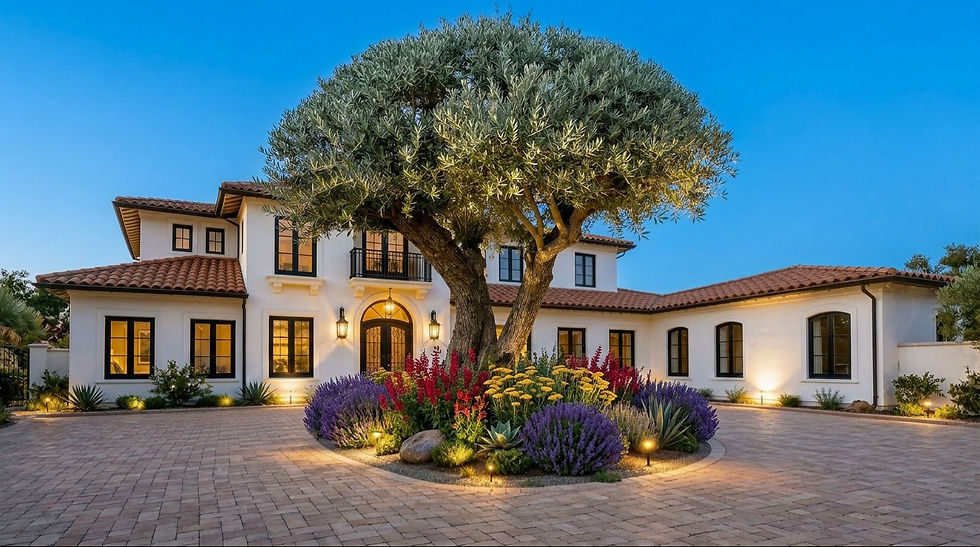
(Images may be digitally enhanced or AI-generated for inspiration, illustrating how olive trees can enrich/transform different landscapes and spaces.)


Comments